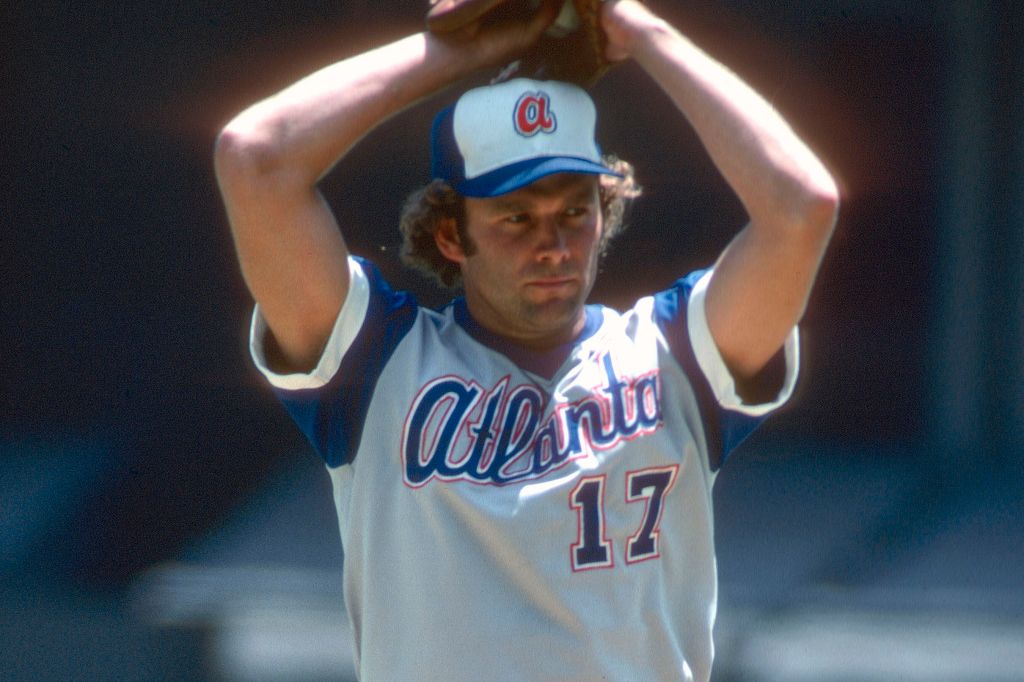
Our Phillies Series Preview takes us to Atlanta for a quick history lesson to get you ready for next year’s MLB lockout. Want to know why the Union and the Owners will never trust each other? It boils down to one player, Andy Messersmith, and everything that happened before and after what he did in 1975.1
Friday, April 17 at 6:40p – Taijuan Walker vs Martin Perez (L)
Citizen’s Bank Park – Philadelphia, PA
Saturday, April 18 at 7:15p – Cristopher Sanchez vs Chris Sale (L)
Sunday, April 19 at 7:20p – Andrew Painter vs Grant Holmes (R)
Here’s a crash course on the first 80 years of MLB labor relations. Two words, Reserve Clause. Back then, every contract was a year to year deal that also included something called the Reserve Clause which stated that the team had the unilateral right to bring the player back the following year at a minimum of 80% of the previous contract. In practice, let’s say a player signed his 1-year contract, then at the end of that year the team and the player would naturally try to negotiate a new 1-year contract. If nothing could be agreed to, that player would NOT be granted free agency as they would now. Instead, the Reserve Clause allowed the team to retain that player’s rights no matter what for another year.
Faced with no other options, players would just sign their new agreement. Sometimes, players would hold out (like Don Drysdale and Sandy Koufax for example2) to get higher wages, but for the most part, they were simply screwed. Each time they signed their new contract, the reserve clause was there, guaranteeing there would be no free agency. EVERYONE, with no exceptions, eventually signed their contract. They thought they had to and would get more money in doing so. Lather, rinse, repeat.
Curt Flood famously challenged the Reserve Clause in the 1960s after he had been traded to Philadelphia without his permission. Flood took his case all the way, but eventually lost in the Supreme Court. Led by Players Association President Marvin Miller, the Union came up with a new plan for 1975: just don’t sign. Andy Messersmith was the guinea pig.
With the Dodgers and previously the Angels, Messersmith was a very good pitcher, but in 1975 he was coming off a runner-up Cy Young finish. Needless to say, the Dodgers would want to keep him in the fold. During the run up to the 1975, Messersmith refused to sign a new contract. His and the Union’s gambit was that if he didn’t sign, then yes he would play for the Dodgers the following season, but that would be the end of it. The Reserve Clause would not renew because he never signed a contract for 1975. The Owners believed that everything renewed again including the Reserve Clause. The game was afoot.
1975 came and went with Messersmith finishing 5th in Cy Young voting. With the question of his free agency at the forefront of the offseason, his case went to arbitration. This is a private court paid for by the Owners used to settle disputes in a binding fashion. Arbitrator Peter Seitz, despite being hired by and paid for by the owners found for Messersmith and the Union. He was fired the next day. The Owners appealed the decision in Federal Court, but lost again. MLB Free Agency was born.
Why are we talking about this with the Braves in town? Because they were owned by eccentric billionaire Ted Turner who, 50 years ago last week, signed Messersmith to a 3/$1m contract, paving the way for record player contracts in the first free market in MLB history. Following the decision, more followed in Messersmith’s footsteps and the Reserve Clause was officially dead.
This is a story for another day, but following the advent of free agency, Owners were not once, not twice, but thrice found to be colluding to freeze out free agents and ordered to pay reparations to the Player’s Union for their anti-competitive practices. This is the background for the fight to come. No Owners remain from these days (save their children) but the memory of these practices still resonate with the Players. Why should they trust an entity that kept them down for so long?
Info: Lords of the Realm by Jon Thayer
- This is the very quick version. If you want to know a lot more about the situation, read Lords of the Realm. ↩︎
- They held out together and really pissed off the Dodgers ↩︎
 PHILLY FRONT OFFICE
Leave a comment