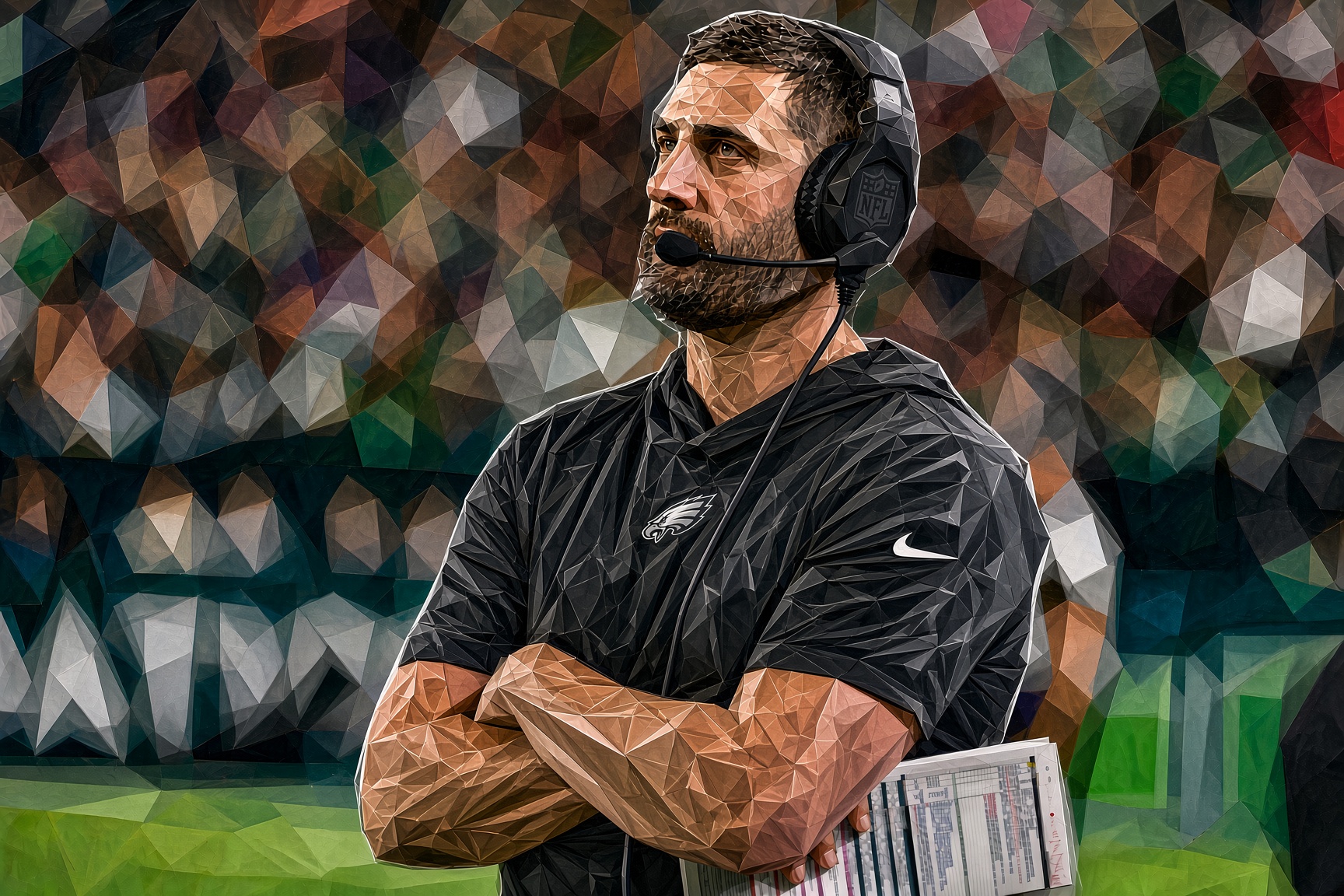
After 4 losses in a row, a few dozen injuries, and just some awful, awful football, the sky is starting to fall on the 2026 Philadelphia Eagles with calls for Nick Sirianni’s job. Owner Jeffrey Lurie probably won’t make a decision until the end of the season, but some were questioning whether he should have been allowed on the plane back from London. PFO is somewhere in the middle thanks to clear problems but a lack of alternatives. We aren’t here to discuss whether Nick should stay or go though. Instead, I want to give the inherent problems with the CEO Head Coach.
What is a CEO Head Coach?
The term is thrown around a lot lately for guys like Sirianni and the Lions Dan Campbell. Essentially, this label is given to guys who are not exactly offensive gurus or defensive geniuses, rather they are the leaders. These are the guys who make final decisions and the buck stops with them, just like any company. Bob Iger I’m sure couldn’t draw Mickey Mouse for his life, but that doesn’t mean he couldn’t run Disney.
In theory, the CEO Head Coach is a great idea. You have your OC running the offense and your DC running the defense, freeing up the HC to focus on the game and decisions that need to be made without worrying about the nuances of play calling. This way he can see what is working and not working on either side to give suggestions when needed and motivate his players. During the week, instead of being in one room designing the offense or defense, he can focus on making sure the different units hit their marks, are prepared, and have the motivation for the next game. He can keep everything in order. Sounds very efficient, right? Well, in practice, there’s a big problem.
What Happens When Things Go Wrong?
The ideal situation for the CEO coach is to have two experts as your coordinators. These are the guys who have seen it all, know what to do, and have forgotten more than any of us could ever hope to know. You want your coordinators to be Vic Fangio. Notice I did not say Kevin Patullo or Sean Mannion, neither of whom had any experience running an offense before they got their jobs.
When you do not have an expert coordinator, that guy will look to the coach for answers. Ideally again, the HC is a former coordinator on that side of the ball who at least has knowledge of the system and can bring some answers or at least a sounding board for the coordinator to use. The CEO coach can’t do that.
Nick Sirianni is so limited in his offensive creativity and expertise that he is of no help at all to a young coordinator like Sean Mannion. Mannion may have some great ideas, but because he has no experience, he runs into situations where he can’t adapt. Who is going to help him? There’s nobody.
We saw this at the end of last season when Jalen Hurts went to the sideline and Sirianni looked on helplessly as Patullo designed up a loss. Similarly, the Lions went from offensive savant Ben Johnson to John Morton last season. It didn’t go well. They tried to fix their woes by transferring play calling duties from their OC to fellow CEO HC Dan Campbell. Since Campbell has no expertise either, it didn’t work.
What Happens When Things Go Right?
Just the opposite has happened in two of the last four years. For the Patullos and the Mannions, we also have Shane Steichen and Kellen Moore. Both were so successful in Philadelphia that they received head coaching jobs following Super Bowl births. Neither of those guys ever needed help from Nick Sirianni.
Well damnit, what does a team do now when their coordinator is too good and gets promoted? Well, they have to hire someone else. This is how Jalen Hurts gets a new coordinator every year. When the offense looks good, job opportunities open and turnover abounds. When the offense looks bad, heads roll.
It is rare that a team gets a coordinator who doesn’t aspire to be a head coach anymore like Fangio. Most of them, regardless of age, want to be in charge of their own team whether they are good at it or not. If your HC is a former good coordinator, that’s fine. The coordinator comes to the team to learn, leaves, and someone else can learn under the tutelage of the master in charge. The CEO coach can’t do that. Instead, a new coordinator is brought in to implement their own system that leaves with them after each success. There can be no continuity with the CEO coach leaving the team to play roulette every offseason.
Nick Has to Go
Do either of the scenarios above sound ideal? It is a no-win situation with Nick at least for the long haul. We have obviously had success over individual seasons, but all the success is fleeting because he brings culture, not ideas.
Leave a Reply