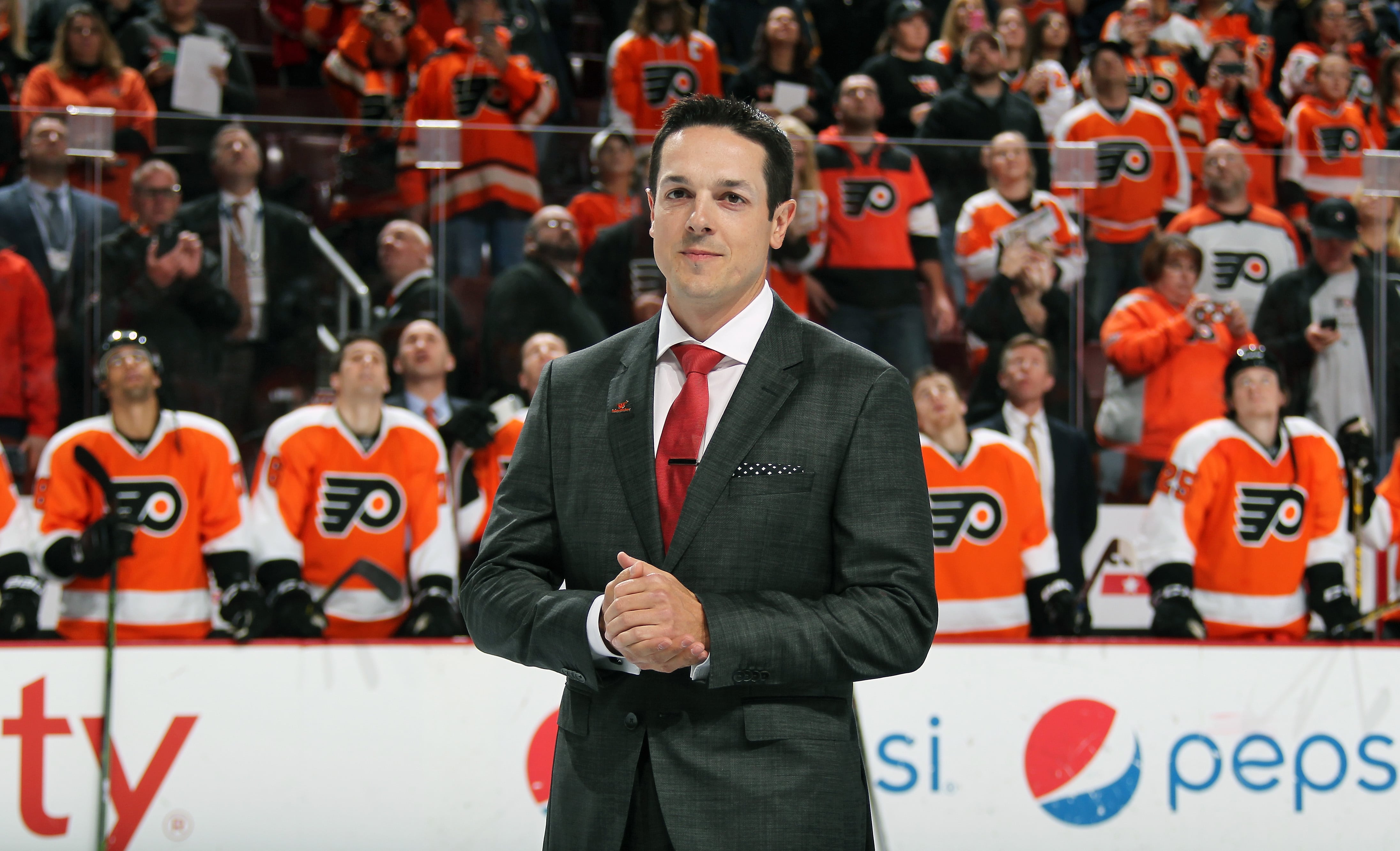
The Flyers will not be adding Leo Carlsson to their top line this summer as the Anaheim Ducks matched the 5/$90m offer sheet he signed with Philadelphia. For the Flyers, they get nothing for their efforts. For the rest of the league though, this changes everything. Now Danny Briere, the GM of the Flyers, gets to watch the world that he created burn.
Ever since the NHL inked its latest media rights deal that ensured the salary cap would go up considerably, record contracts were sure to follow. It’s been slow going though. Two years ago, Leon Draisaitl signed an 8/$112m extension that averages $14m per season. Last year Connor McDavid was supposed to shatter that record, but went with a well below market 2/$25m extension instead. Before this season started, Kirill Kaprizov of the Wild was the first one to really lean into the league’s new finances with his 8/$136m contract and $17m AAV. These guys are all top of the league talents right now. That is not Leo Carlsson, at least not yet.
Before Carlsson signed his offer sheet, the Ducks figured they could keep the 21-year-old on a $10-$12m per year deal. When he first received the offer sheet, he tried to do the Ducks a solid by asking for $15m. When they balked, $18m it was. The Flyers were banking on Carlsson blossoming further into an elite center, but he has yet to even be a point per game player. He is now the highest paid player in the NHL.
I’ve heard some people claim that everyone understands that the Carlsson offer sheet is an aberration. That’s not even close to true. Players, agents, and GM’s who do not have their heads buried in the sand all understand that this is the new reality of the NHL. There is a 20% of the salary cap max on contracts and we are going to approach that very soon.
For one, Connor Bedard was the #1 pick in the same draft as Carlsson. As a restricted free agent himself, his new starting price on a deal is now $18.1m per season. Then there’s Adam Fantilli, the #3 pick in that draft. I’m sure he wasn’t thinking anywhere near $18m 7 days ago. You better believe he is now. The happiest person in the world at the news has to be the agent for Macklin Celebrini. A contract extension for him next year is not going to even need a negotiation. What’s 20% of next year’s projected $113.5m salary cap? Multiply that by 7 and you have a deal.1
Then there’s Carlsson’s teammate, Cutter Gauthier. 41 goals as a 22-year-old is certainly going to make him believe that he is at least as responsible for Carlsson’s success as Carlsson. If you are Cutter, are you taking less than $18m? It will be very interesting to see what Anaheim does to get out of their sudden cap crunch.
Of course, the Flyers are not on an island. While much of the team’s players are locked up long term, they will have a hopefully broken out Matvei Michkov next year and then Porter Martone after that to sign to extensions. Then there is their own rstricted free agent forward, Trevor Zegras. While I feel like the Flyers already have a deal with him, if not he could ask for substantially more than they had first thought. Most had him pegged for $8m-$9m per season. He’s easily in 8 figures now. How will an arbitrator look at Carlsson’s numbers compared to Zegras and think he isn’t worth the boat?
The NHL Salary Cap will continue to grow and teams will have to deal with their new reality. Carefully planned budgets and strategies will now have to be rethought. Trade value for players under the old reality will skyrocket. Max contracts are going to be the norm very soon. Players like Celebrini and McDavid are going to get it and others will follow. Danny Briere took a risk on the Carlsson offer sheet and it didn’t work out. That doesn’t mean the previous reality didn’t burn up in the process.
Photo: Len Redkoles / NHLI via Getty Images
Contract Info: Spotrac
- 7/$158.9m or $22.7m per year, the biggest NHL contract of all time. ↩︎
Leave a Reply