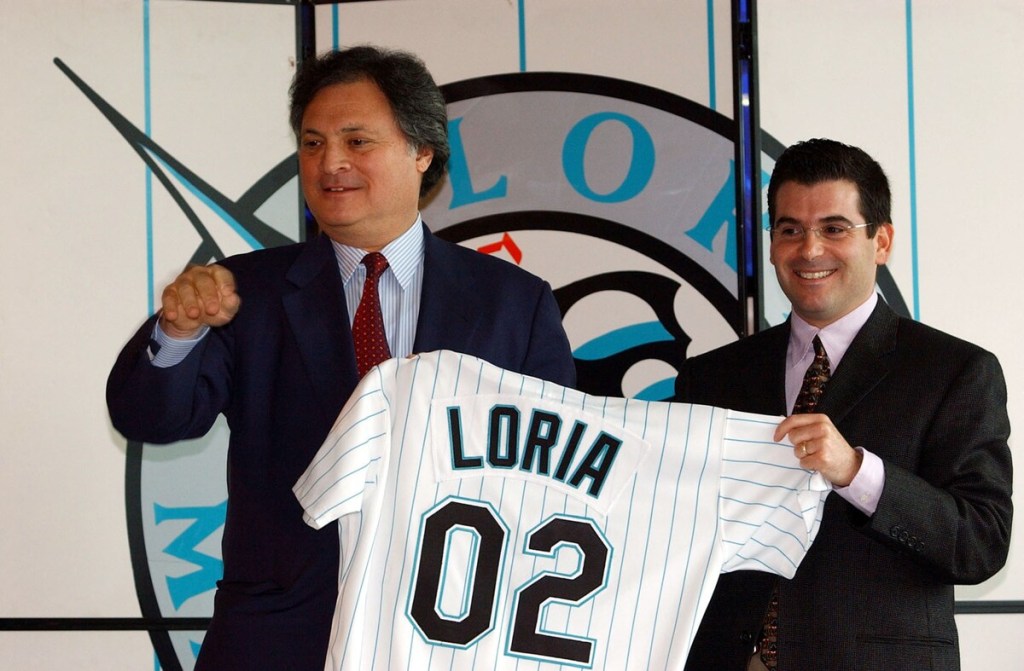
Baseball back in 2002 was in a bad place. Well, it wasn’t really, but the powers that be in baseball really wanted you to think it was. In reality, many cities simply did not want to shell out municipal money to fund brand new stadiums. Because of this, MLB threatened to contract several teams including the Expos and Marlins. They never really planned on doing this, but it did get baseball what it wanted for the most part. Montreal though, was a problem.
Jeffrey Loria bought a stake in the Montreal Expos in 1999 but was the majority owner by 2001. As soon as he took the reins, he demanded a new stadium to replace Olympic Stadium which had been around since 1976 (and is still being used today). Having the business savvy of an art dealer, he also promptly botched the negotiations for English speaking broadcast rights and the team went without for the 2000 season. Still, the team was valued at $50m.
While Loria was moving his way through Expos ownership, John Henry went right to the top of owning the Florida Marlins with an outright purchase from Wayne Huisenga for $158m. No part of him wanted to be there. The Marlins went from the World Series to last place over night and shared a rain-soaked stadium with the Miami Dolphins far from downtown and too impractical for anyone to travel to.
At the same time, the Boston Red Sox were mired in yearly meltdowns and cash losses despite their popularity. They were a sleeping giant though and practically everyone knew it but Red Sox ownership, which had passed from longtime owner Tom Yawkey, to his wife, to a trust. The Trust and its CEO John Harrington though, wanted out.
No one was where they wanted to be.
Montreal was the worst market in baseball and Loria had done nothing in his short era of leadership to help the situation. As MLB floated the idea of contraction for the Expos, Loria threatened to sue. Baseball commissioner Bud Selig was juggling several problems and this was now at the top of the list. He needed to shut Loria up, get Montreal out of the baseball business, calm down Henry who was anxious to cut bait on the Marlins already, and manage the possible sales of not only the Red Sox but the Angels as well. Selig came up with a plan.
Step 1 – Take care of Loria. Loria just got into the baseball business and wasn’t just going to go away. Selig needed to get creative to make him happy despite his market being non-tenable. Considering Loria was an art dealer, they came up with a plan that was perfect for that kind of background. They offered him a trade.
Step 2 – Get out of Montreal. Since the Expos were a very distressed asset at the time and no great options had presented themselves, Selig and the rest of MLB decided to buy the Expos from Loria at the great price of $120m, more than double the franchise value. They would also give him an interest free loan in order to make another purchase.
Step 3 – Get John Henry to the Big Time – MLB liked John Henry and wanted him in charge of a better situation. Henry wanted that too. Selig went to Henry and told him that if he could secure ownership of another franchise, he would line up a buyer for the Marlins with pre-approval for the same price he had just paid. Henry wanted the Angels. However, the Walt Disney Company was flaky about actually selling the team. The needed to pivot.
Step 4 – Sell the Red Sox (to Henry). The Boston Red Sox had been under control of the Yawkey family in some capacity since 1933. It wasn’t just the team going up for sale either, it was the NESN TV network and Fenway Park. Charles Dolan (the father of current Knicks owner James Dolan) offered $720m. Another bid from a NYC attorney was for $790m. Instead, MLB went with the $660m offer from Henry and company.
In one fell swoop, three franchises changed hands. MLB essentially paid Loria a premium for his shitty franchise in Montreal specifically under the condition that he buy the Marlins from Henry who would not profit from the sale. Henry’s condition was that he was to buy the Red Sox in a sweetheart deal of his own, with the Yawkey’s possibly being forced to surrender to the deal under the assumption that MLB owners would simply not approve anyone but Henry. Selig was now in charge of the Expos franchise with the intention of flipping the team to ownership in Washington DC eventually. In 2006, this would happen with Ted Lerner paying $450m to MLB for the Nationals.
Loria and the Marlins would win the World Series in 2003. Henry and the Red Sox would win the World Series in 2004. Lerner and the Nationals would win the World Series in 2019. I guess it worked out.
Source: The Game by Jon Pessah
Photo: Walter Milchot/AP
 PHILLY FRONT OFFICE
Leave a comment