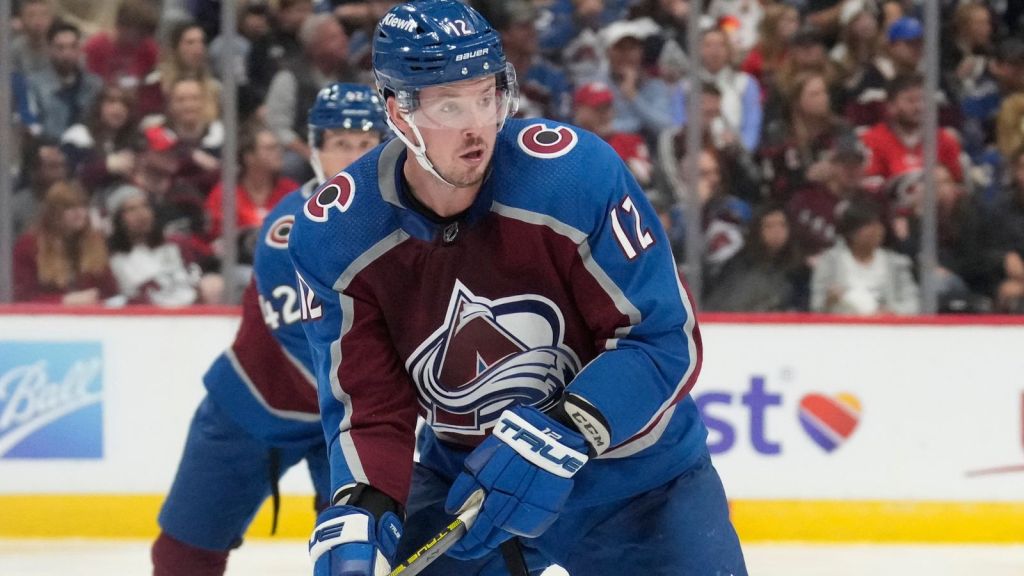
Though it’s the offseason, you may have heard that the Flyers got a big win yesterday. Not on the ice, but in court. An arbitrator ruled that the Flyers were within their rights to terminate the contract of center Ryan Johanson who was acquired at the trade deadline in 2024 from Colorado. Since I was someone who knew a thing or two about this in a previous life, let’s answer a few questions.
What is arbitration?
Simply, arbitration is private court. If you sue someone, for the most part, the proceedings are open to the public and anyone can view the case filings if they know where to look. You may have to pay your lawyer, but you do not have to pay the Judge who is either an appointed or elected official of the county, state, or US government. In arbitration, everything is private. Both the players and the league have no interest in airing their dirty laundry, so you and I cannot just look up what happened unless they make it public (they won’t). While state and federal courts have uniform rules and deadlines, arbitration proceedings have the option to follow these rules but the parties can agree to change them if they want and the arbitrator approves. The arbitrator is a person (usually a former judge or attorney) who is paid by the parties to hear evidence from both sides and come to a legally reasoned decision about the issue. The arbitrator’s decision is binding unless there is evidence of foul play basically.1
Instead of a lawsuit, a player files a grievance against a team via the Player’s Association. The grievance lays out what the player believes happened, what the team did wrong, and what kind of relief the player wants.
Why arbitration and not court?
Because they agreed to it. Arbitration is provided for in the collective bargaining agreement signed by the players and owners. Part of unionization is to be able to agree to rules and regulations that would not apply to the average person or company for better or worse. There is a federal law that says if you agree to arbitration, then you have to go to arbitration with minimal exception.2
Enough law-talkin’, what happened with Ryan Johanson and the Flyers?
At the 2024 trade deadline, the Flyers sent Sean Walker to the Colorado Avalanche for a 1st Round Pick and Ryan Johanson. Walker was good, but the reason the return was so high was because the Flyers were going to take on 50% of the remaining 1.5 years on Johanson’s contract with an $8m AAV. That’s alotta scratch in the NHL.
There was one big problem with the trade, Johanson seemingly didn’t want to go to Philly. As a 30 year old vet, you can imagine that he had no interest in playing for a rebuilding team and especially not for John Tortorella. Torts had been Johanson’s coach back when both were in Colombus and the two did not get along. Upon arriving in Philadelphia, Johanson told the Flyers that he was injured and unable to play. The Flyers tried to demote him to the Phantoms, but he did not report. He said he needed surgery but the Flyers medical staff disagreed (no idea if they were even allowed to examine him). He was cut and his contract was terminated in the offseason due to an undisclosed material breach. Johanson still had 1 year and $8m (split 50/50 between Colorado and Philly) remaining on the deal but the Flyers were not going to pay him and took him off their cap sheet. When they couldn’t work out a resolution to the situation, Johanson filed a grievance.
So, what is the grievance about?
Johanson wanted his money and the Flyers didn’t want to give it to him. NHL contracts are guaranteed just like in the NBA and MLB. If a player gets hurt, then he still has to be paid. The Flyers currently have a situation with Ryan Ellis where he is effectively retired because of injury, but the Flyers still have to pay him because he is still under contract and not actually retired. You can’t just terminate the contract of an injured player. Well, what if the team thinks you are faking it? That’s presumably where Johanson and the Flyers were when the grievance was filed.
Johanson wanted his $8m. You can imagine that he also wanted more that that considering he has not yet signed with another team and his career may be over with his reputation tarnished. The Flyers basically Scarlet Lettered him as a faker and bad teammate, a death sentence in hockey culture. By not playing at all in 2024-25, Johanson also lost a year of service time. Though I did not look up whether this definitely concerns him specifically, this could have a negative effect on his pension and medical insurance post career.
The Verdict
We do not know the specific reasons the Arbitrator used to make the decision, but it has been reported that the Flyers won the grievance. We can infer from this that the material breach that the Flyers claimed was committed by Johanson was a valid reason for terminating the contract. Basically, Johanson was either faking his injury or not handling it correctly and had no legitimate reason to not report to the Flyers.
The Fallout
Because the contract was terminated, not only was the $8m never paid to Johanson, but that money was not accounted for on the salary cap for the 2024-25 season by either the Flyers or the Avalanche. Had Johanson won the grievance, then $4m would have accelerated to the top of the cap sheets for Philadelphia and Colorado for this season. The Flyers currently only have $370k in cap space (though that’s before adding the salary of Ryan Ellis to long term injured reserve) while the Avalanche are at $2m. Had they lost the grievance, this could have been a problem.
For the Flyers, they had already turned the page on Johanson. Terminating a player contract though is an extreme move an it could be seen by agents as a war against players in general. For that reason, the verdict is validating. They were able to show that they did not come to the decision to terminate the contract lightly, but rather they had no choice. It was also a great bit of business. Instead of trading Sean Walker and $4m for a 1st round pick (#22), they didn’t have to pick up the tab at all.
For Johanson, he did not sign with another NHL team last year and is currently unsigned for the 2025-26 season. Would another team take a chance on him at this point? He is now 33 and the former #4 overall pick is long past his days as the consistent 60 point scorer he was in Columbus and Nashville. Now he is a documented malcontent too. I’d say he’s done.
- There is also something called non-binding arbitration, but that is nothing that applies here ↩︎
- The only time I was ever able to get out of an arbitration agreement was when an employer provided several documents in both English and Spanish except the arbitration agreement was only in English. My client couldn’t read/speak English. Interestingly, I didn’t win because she didn’t know what she signed, that part would have been fine, it was because they actively tried to deceive her by providing everything else in Spanish except the arbitration agreement. ↩︎
 Philly Front Office
Leave a comment